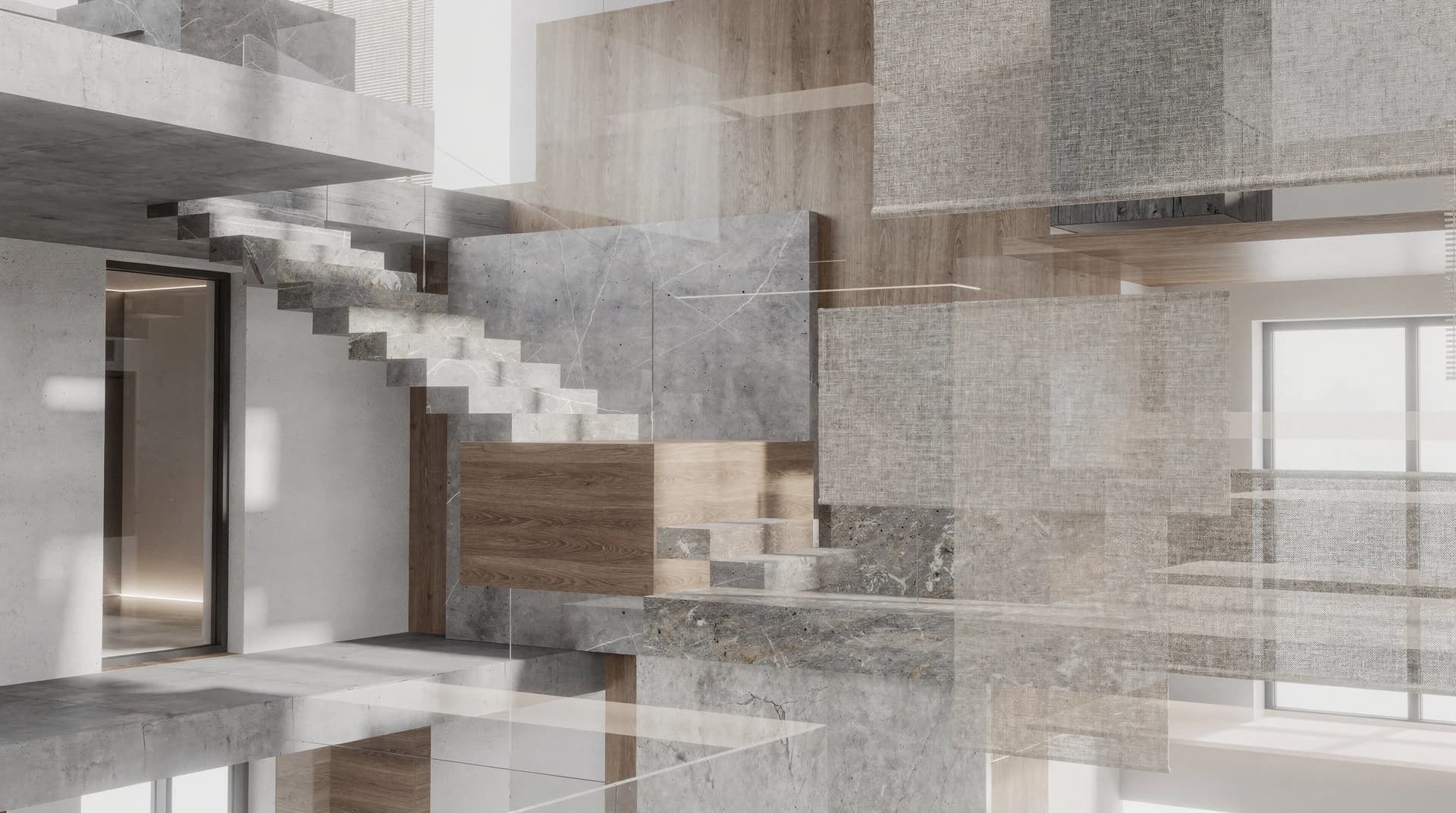
The Concept of Sole Ownership in Interior Design: Where Is the Fine Line?
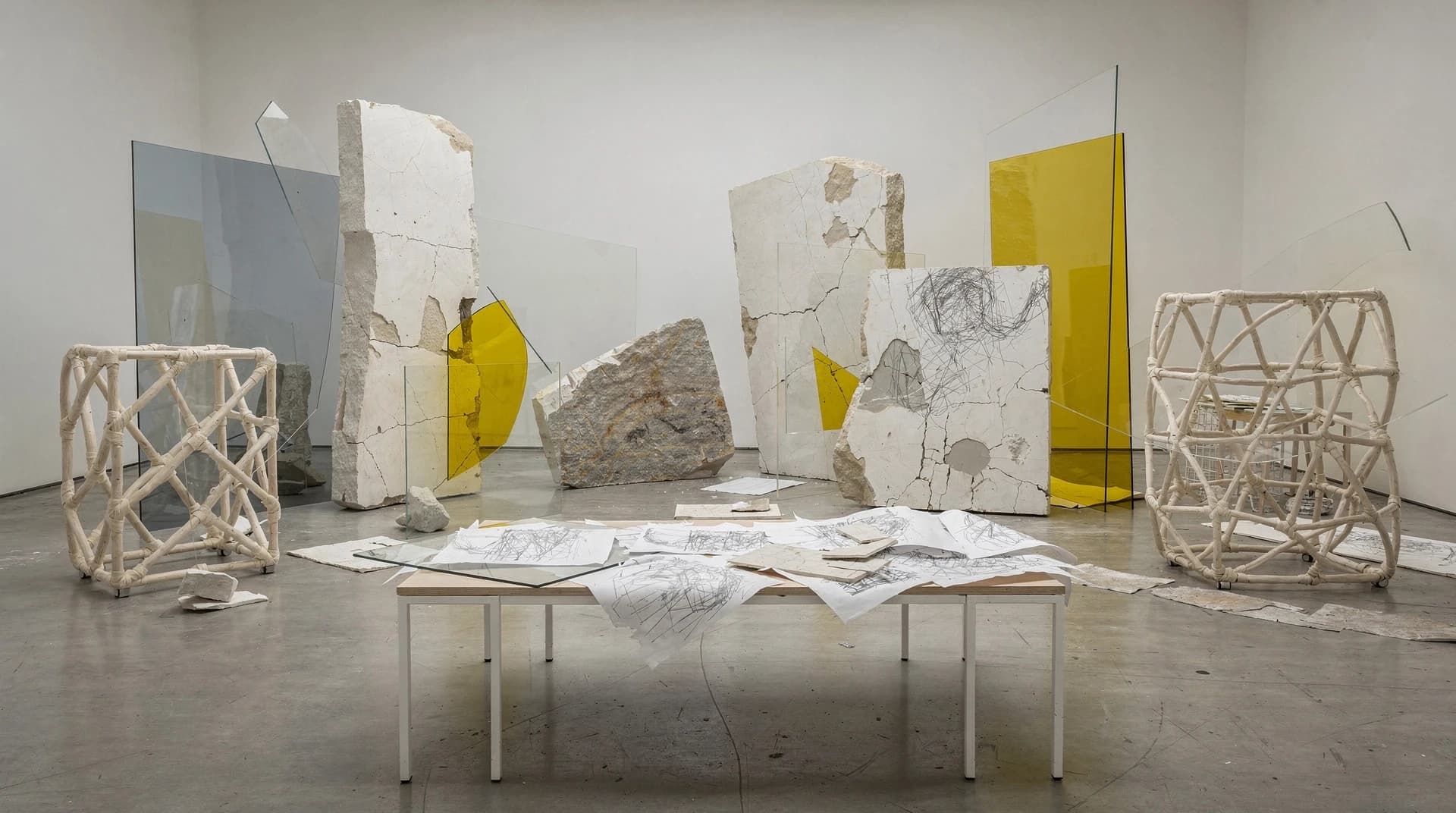
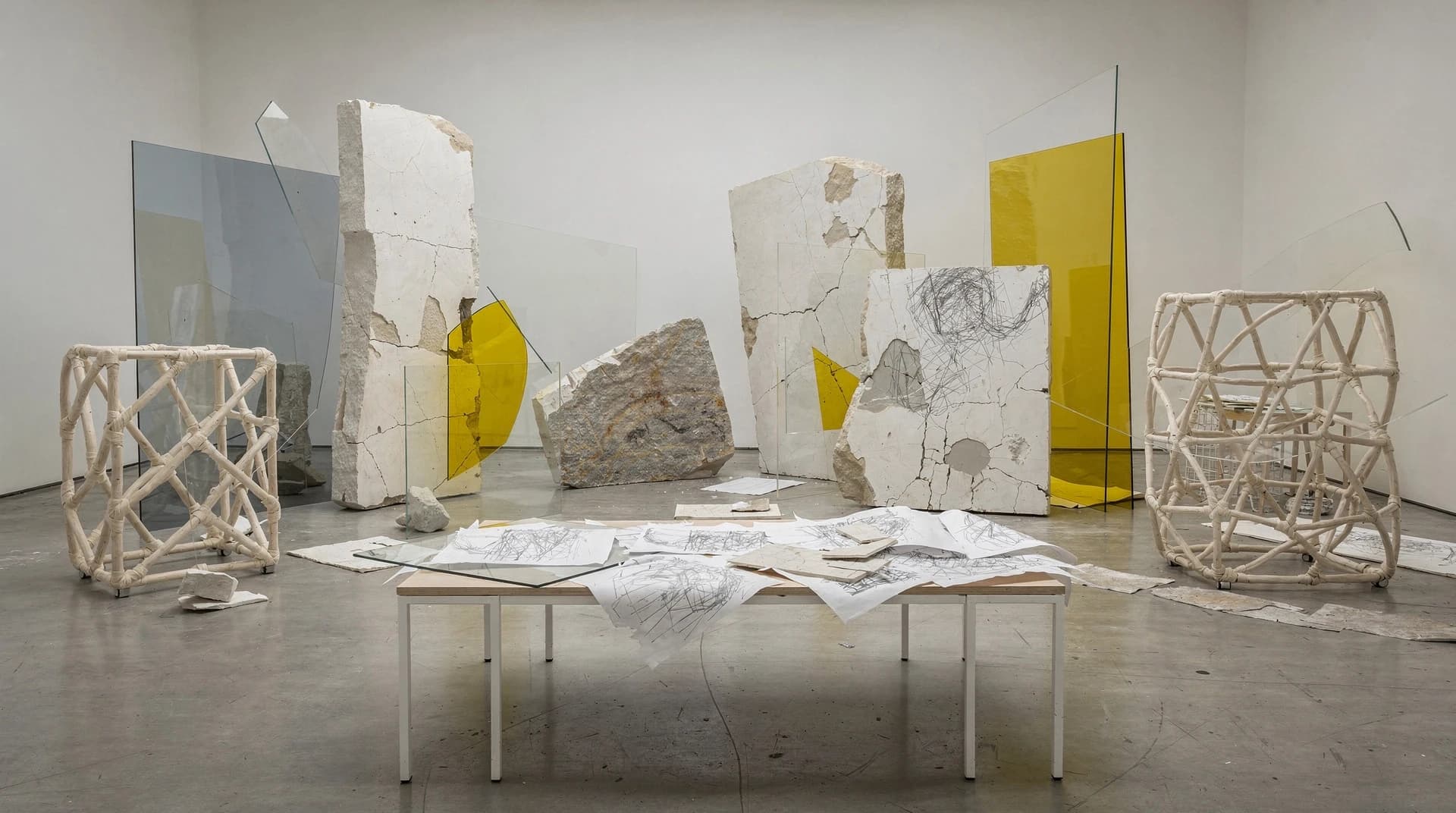
«I reject the idea of sole ownership of a work of art» — David Lamelas.
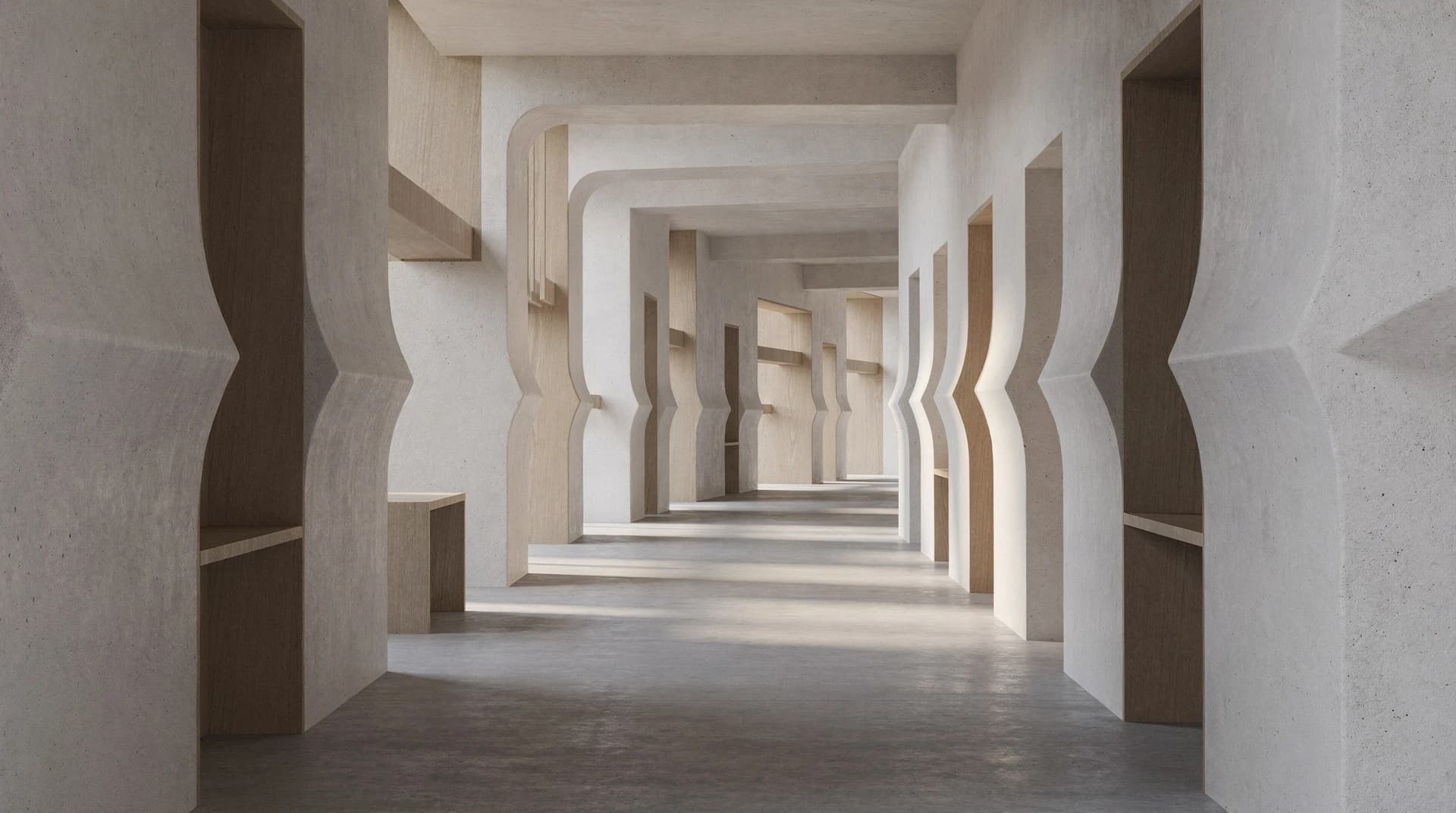
You enter a space — and, for a moment, stop.
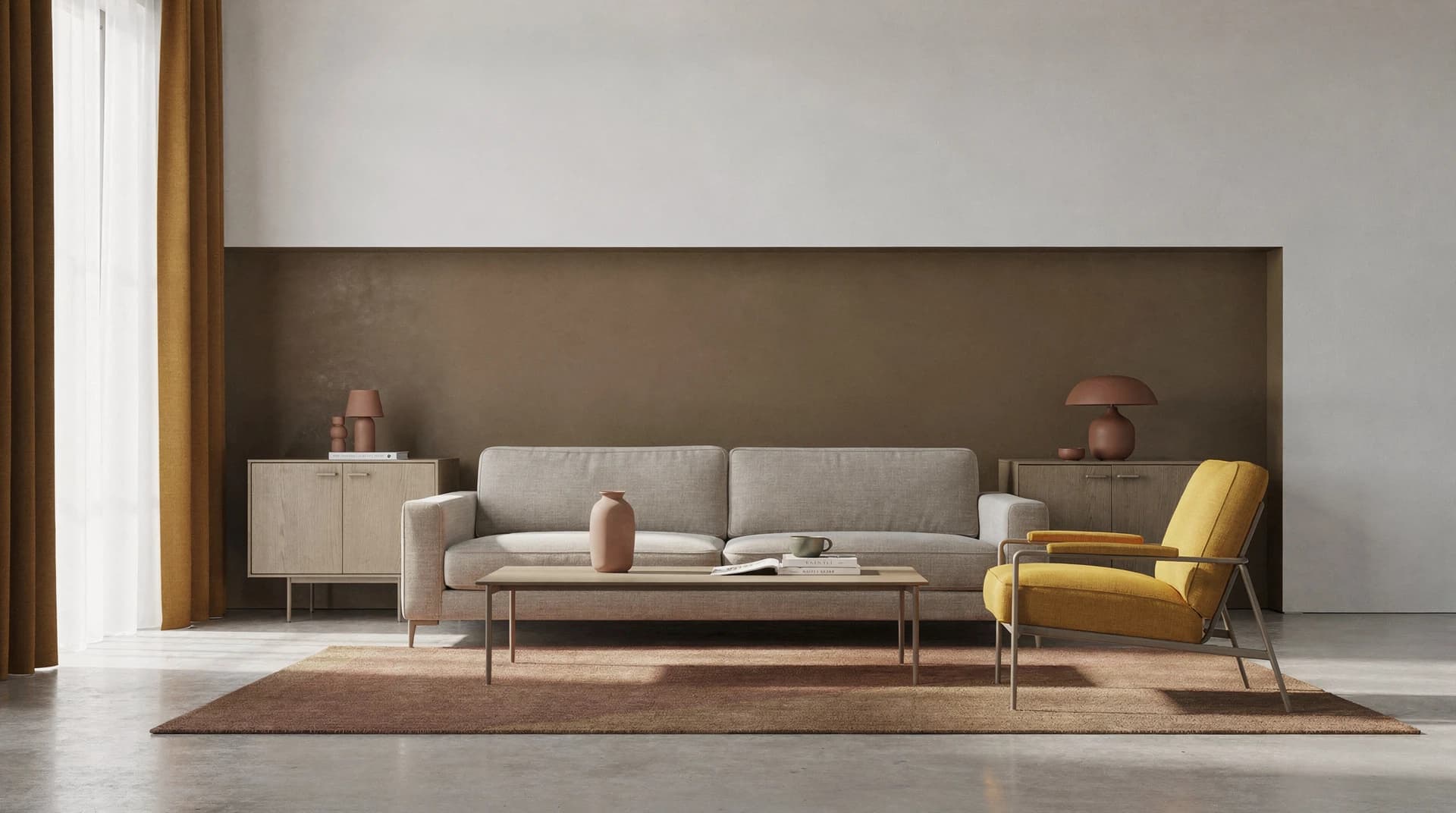
Does this room interior design belong to one person? Or does it belong to eras, millions of images, thousands of designers, and endless references dispersed across the digital environment?
Generative AI brings Lamelas’s question back into every decision — down to the level of the pixel.
The Concept of Sole Ownership.
An interior designer says: «I created this interior».
This is authorship. This is a signature. This is the value people pay for.
And it remains so.
Interior design has always been assembled from experience — both personal and collective.
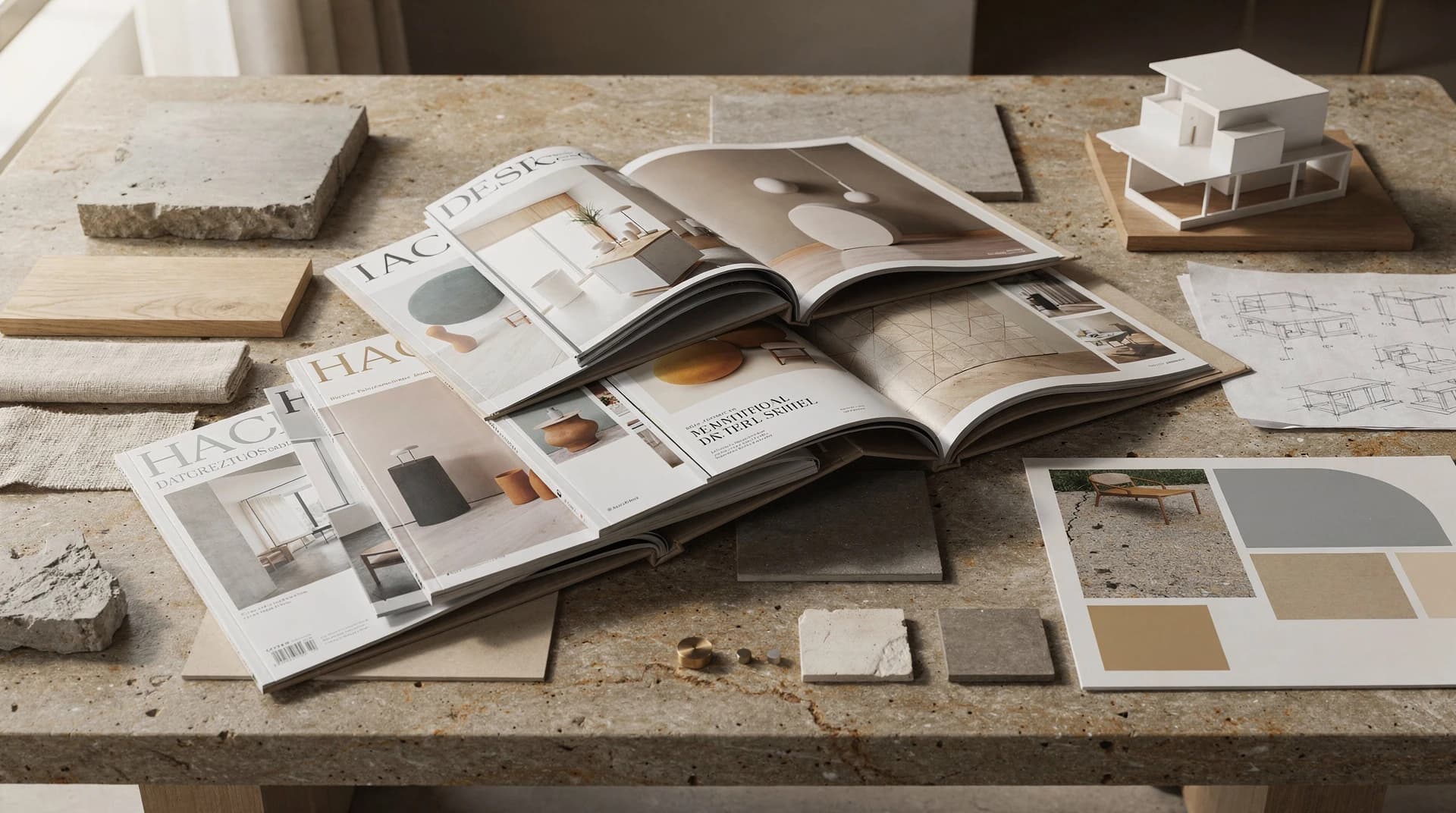
From visual literacy, from lived experience, from what has been seen and read in books and magazines, absorbed through travel.
Everything that passes through a person and becomes their creative language.
AI does not position itself against this process — it makes it faster and broader.
Home design with AI is still assembled from memory and experience, both personal and collective: from photographs, sketches, magazines, and, at the same time, from an endless digital space. From connections, not only from gesture.
The difference is not in the source, but in the speed.
The way a person sees, selects, and interprets remains individual and unchanged. What changes is the scale: there is more information, and the path from idea to form becomes shorter.
AI for generative interior design becomes a tool that does not replace the author, but expands their field of vision.
Where Is the Line?
When does «your interior» stop being yours alone?
When does it become part of a shared visual experience?
Who Owns the Idea?
Lamelas asks the question more precisely: who owns an idea?
Can one own something shaped by experience accumulated long before any of us? Can one claim what passes through us, but does not begin with us?
AI only exposes this process. It does not create from nothing — it assembles: from images, from the architecture of memory, from a culture that has never been individual.
And then a new question arises: who owns the result?
The creator of the prompt? The algorithm? The system? Or culture itself, manifesting through them?
The Fine Line of Authorship.
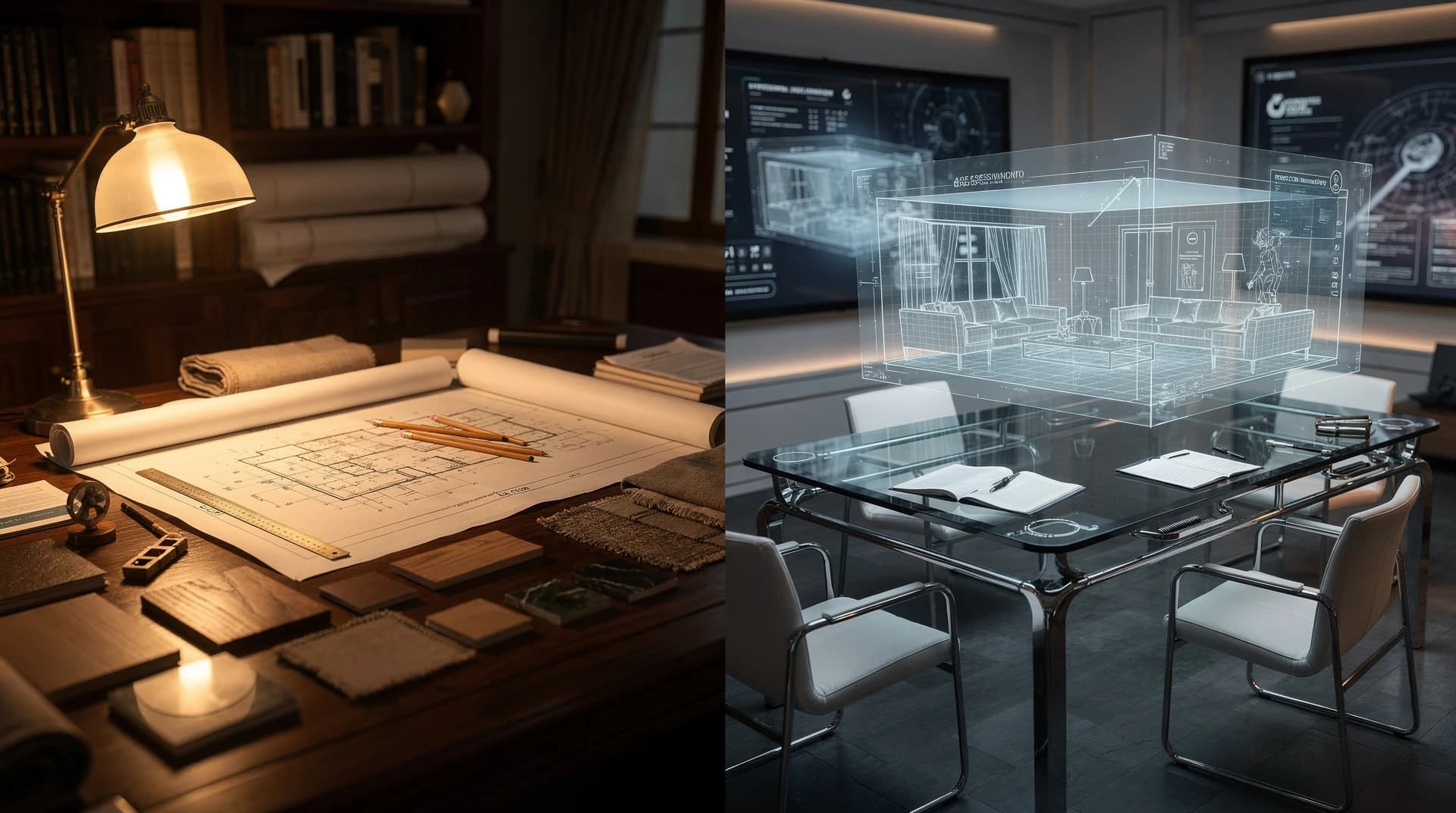
In the past, a collector bought an object.
Singular. Complete. Attached to an author.
Today, interior design with AI increasingly exists as a process.
As variation. As flow.
Where is the line between a «unique interior» and one of many possible configurations?
Between an authorial work and a generative experience?
And here, the interior designer no longer simply creates — they tune.
The task of designing a room with AI becomes the task of assembling a state.
Even online interior design, in this context, stops being merely a tool — it becomes an environment for thinking.
Is There a Line…
In the age of AI, the world’s visual experience becomes accessible almost instantly. And this is already our reality.
Every interior is built on accumulated knowledge.
On what has been seen. On what has been lived. On what has been borrowed.
The only difference is speed.
For us, the creators of TimeAI, this is not a question of technology. It is a question of the nature of creativity.
AI does not destroy authorship. It reveals its conditionality, without diminishing the uniqueness and talent of those who create spaces.
In theory, the line exists — as an idea.
In practice, it dissolves.
AI simply makes visible what has always been hidden: creativity cannot belong to one person alone. It moves through time, through generations, through countless forms.
And, more broadly, this is its true nature.
Lamelas asks: «Where is this fine line?»
TimeAI answers: the line is intangible — like the Universe, like creativity itself…
Text and images: TimeAI