Eastern Poetry of Space: AI Interiors 2026.
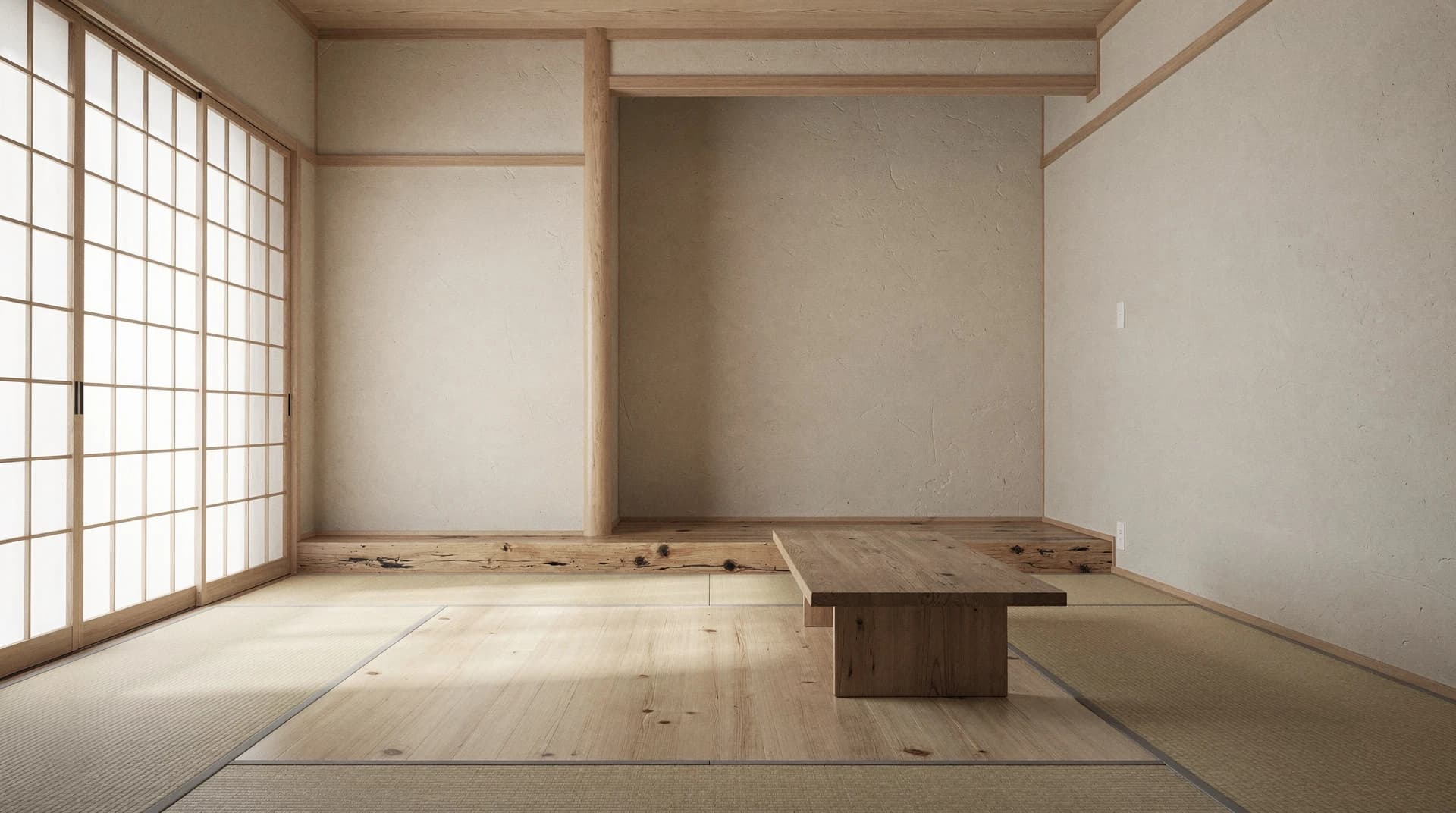
A precise description drawn from Kobayashi Issa’s haiku, immersing us in an Eastern atmosphere: «fallen leaves» — the pale shade of the walls and ceiling; «hearth» — a quiet home; «autumn whirlwind». A mood that resonates in every detail, like the whisper of wind in a bamboo garden.
Here, Japanese interior style appears not as a set of techniques, but as a state of being.
Pale Minimalism.
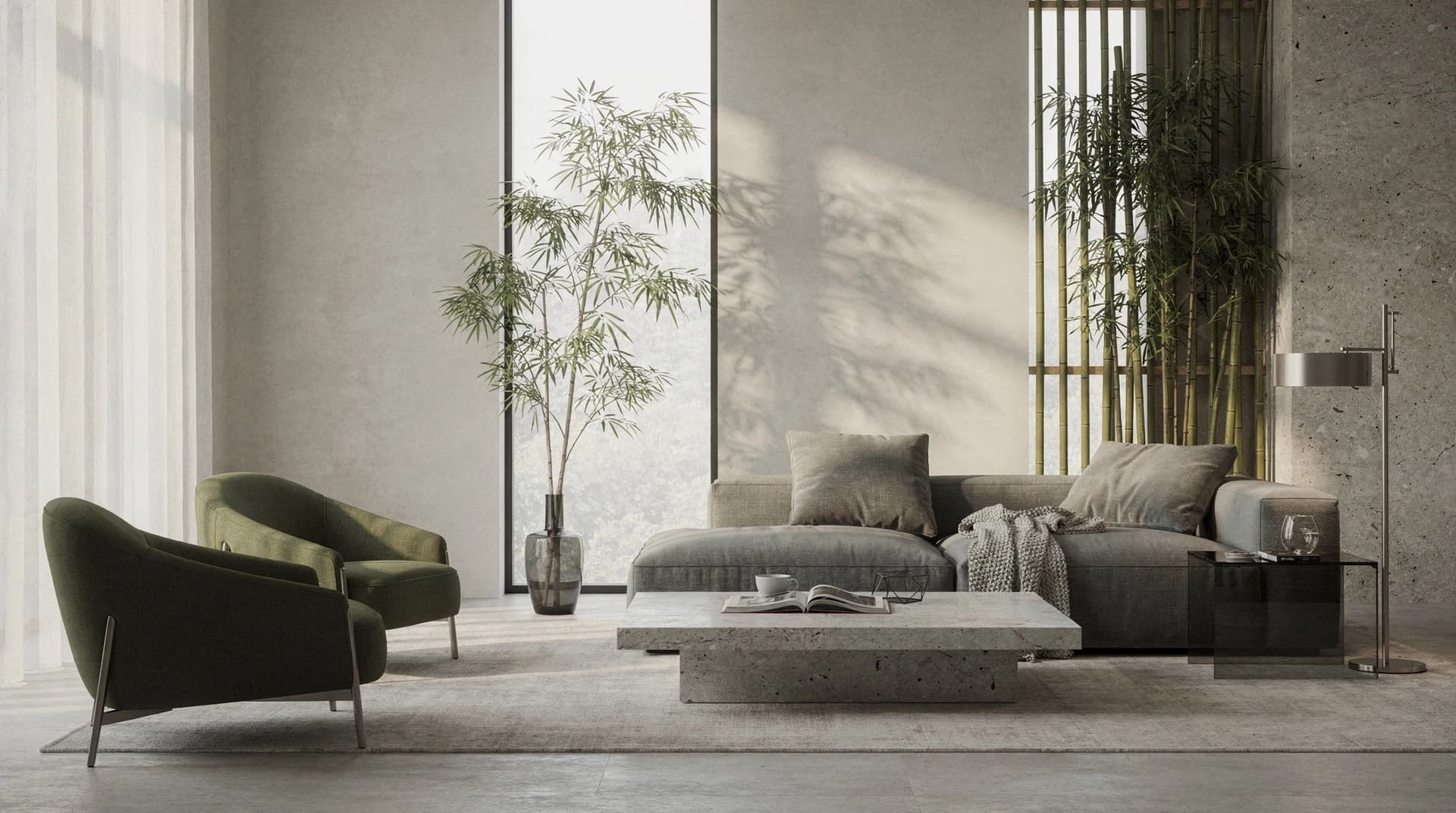
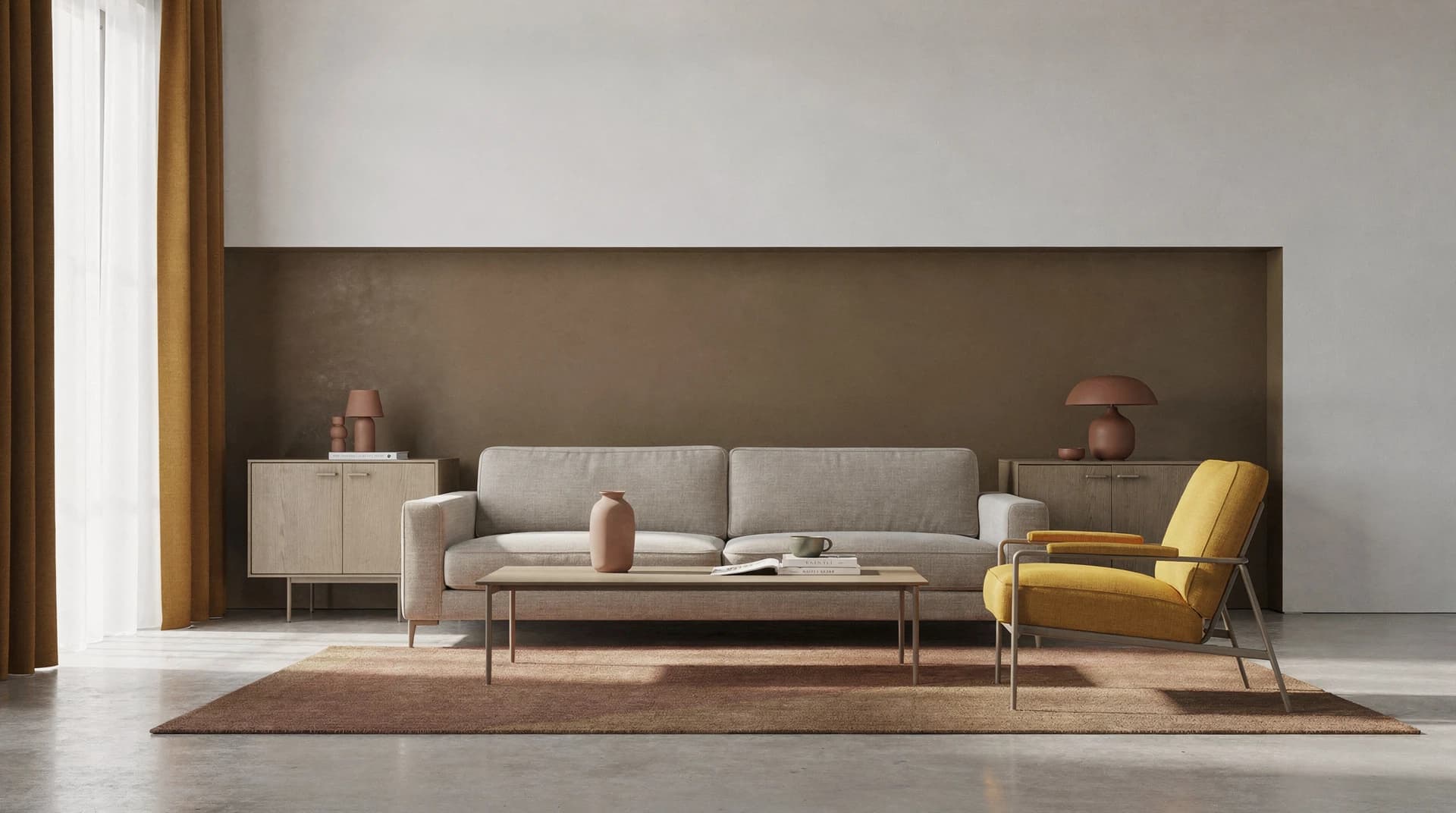
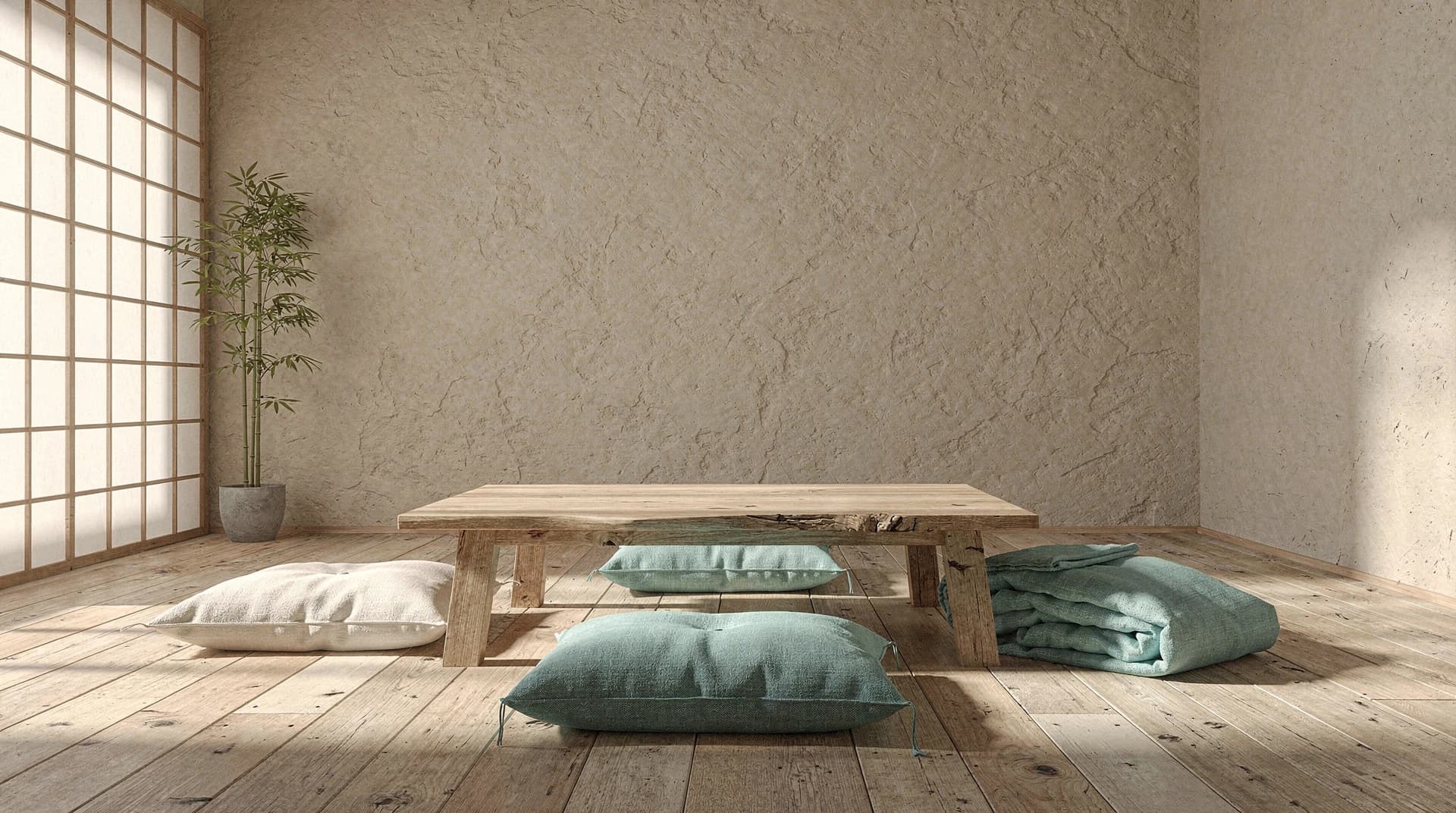
You open the door — and the space immediately sets the tone. Pale minimalism, where colour works not as an accent, but as a state. Shades of warm sand and muted turquoise form a layered environment close to Eastern minimalism in interiors, where every transition is almost imperceptible, yet deeply felt.
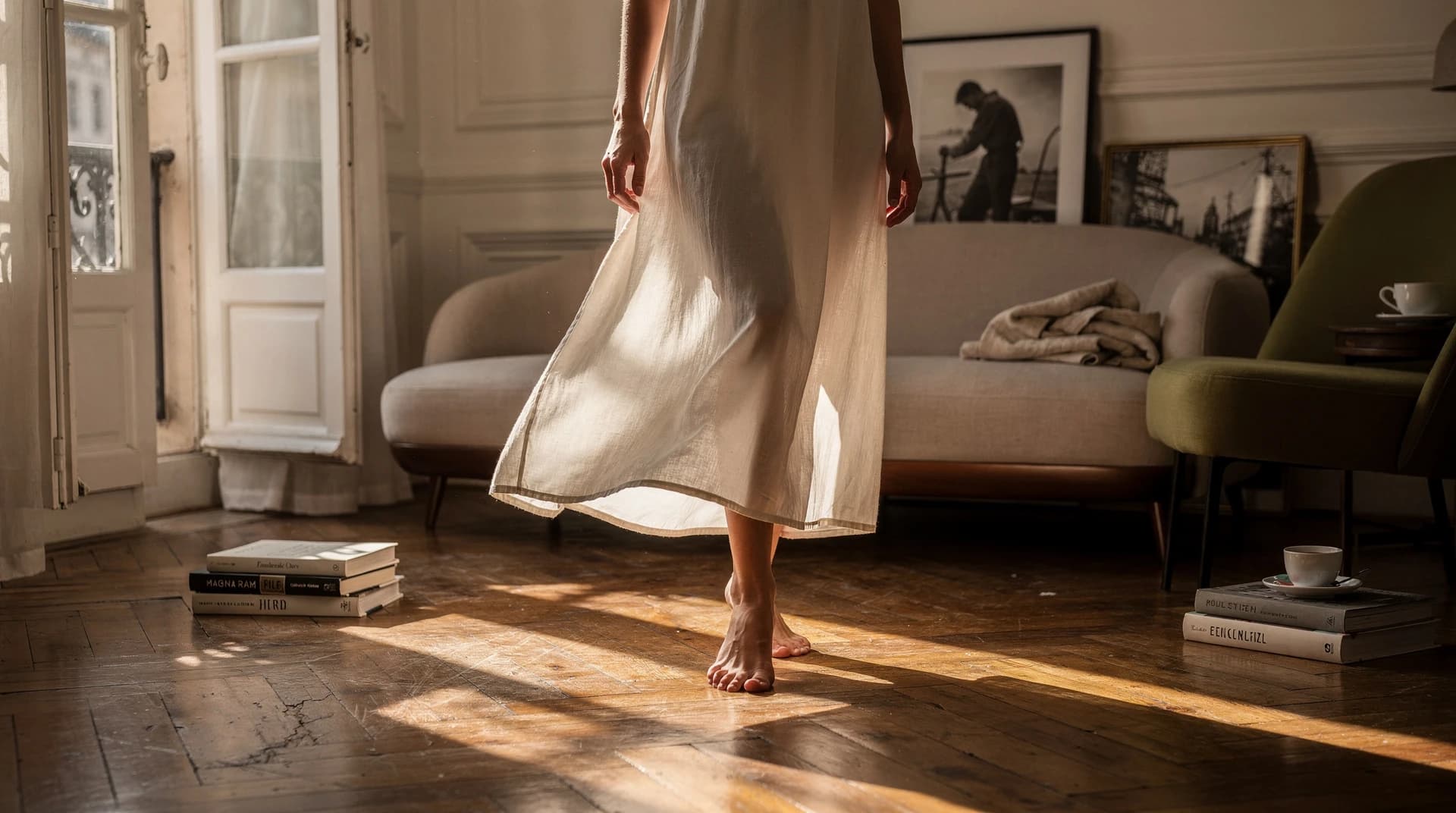
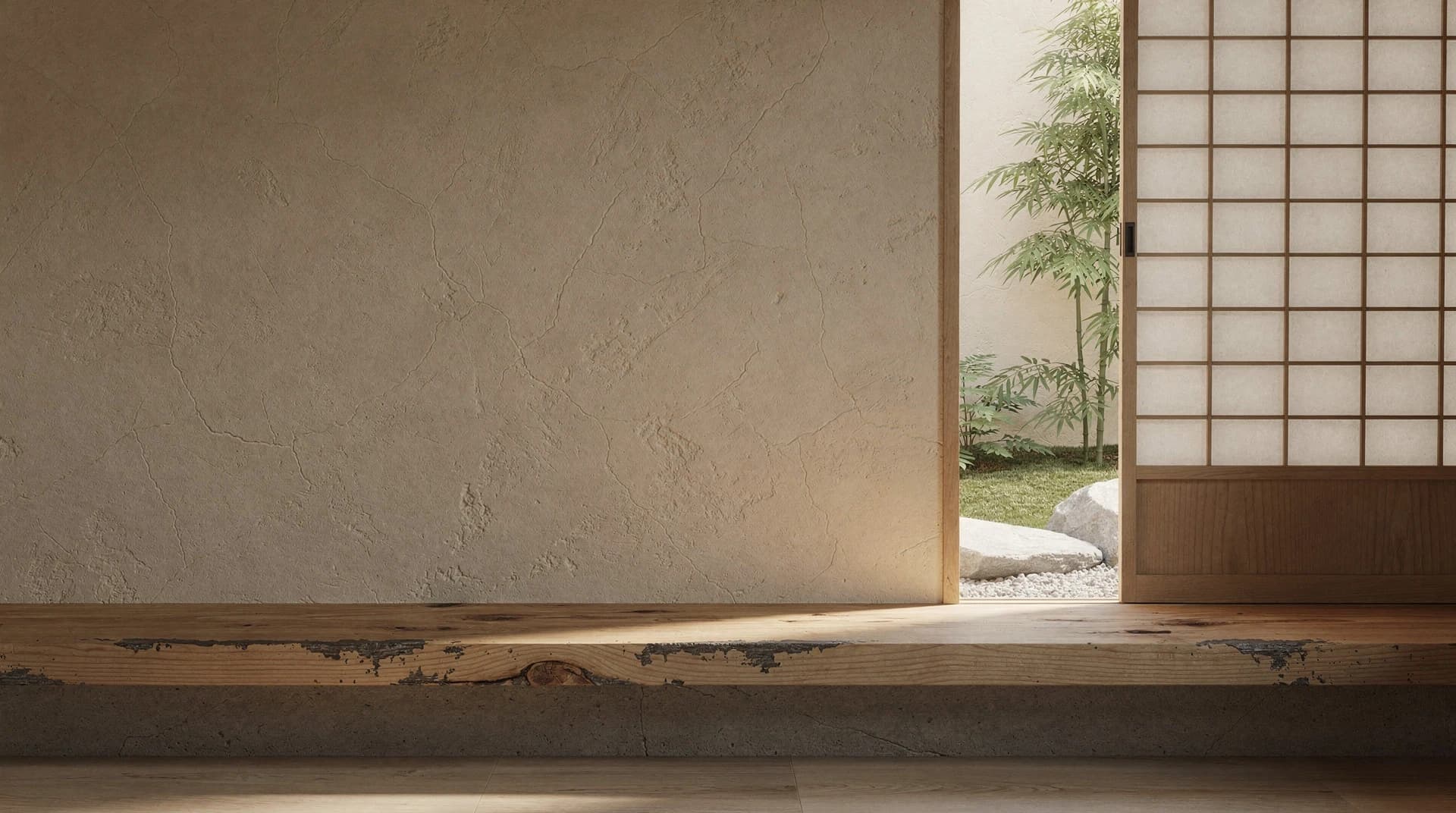
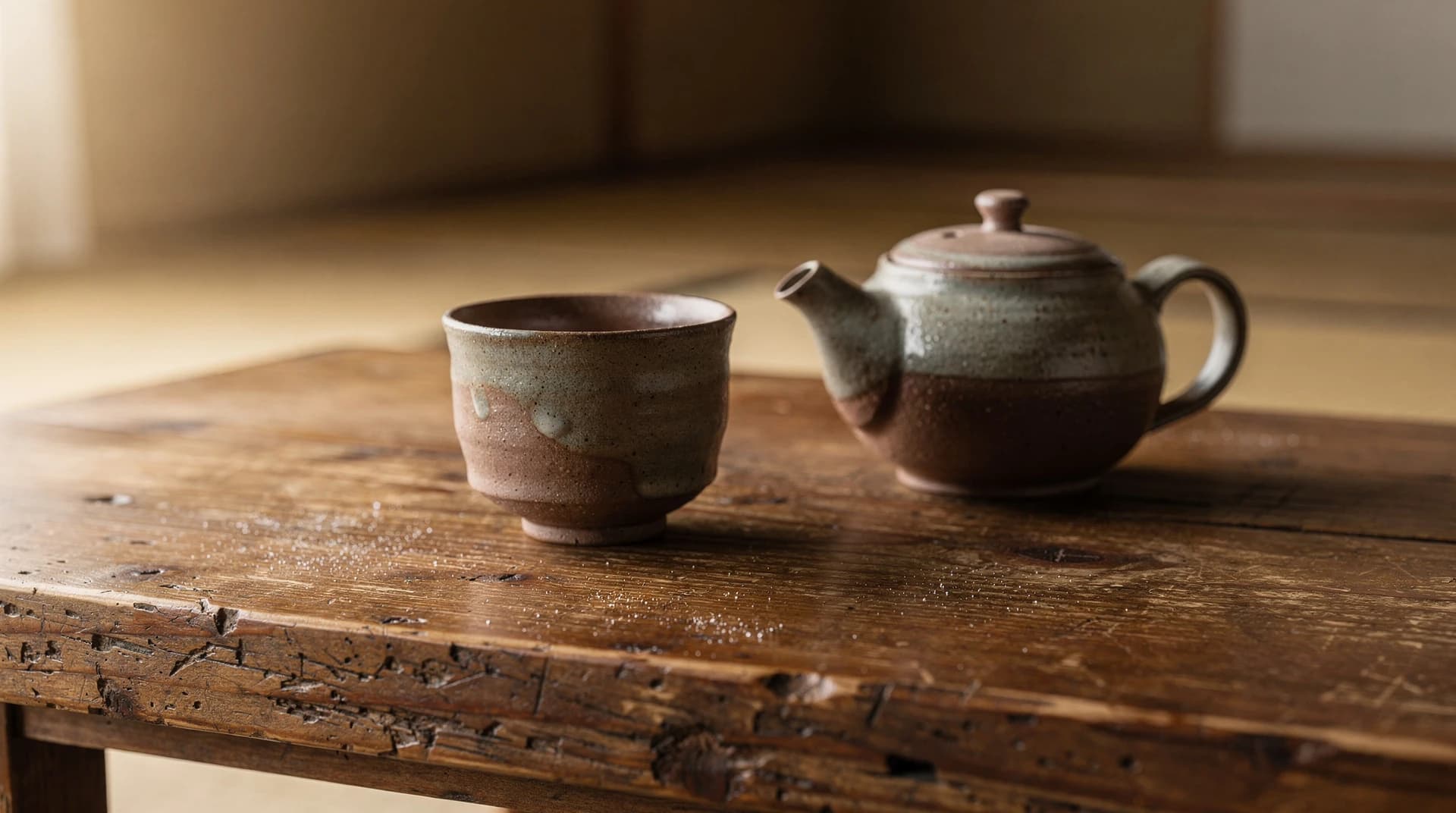
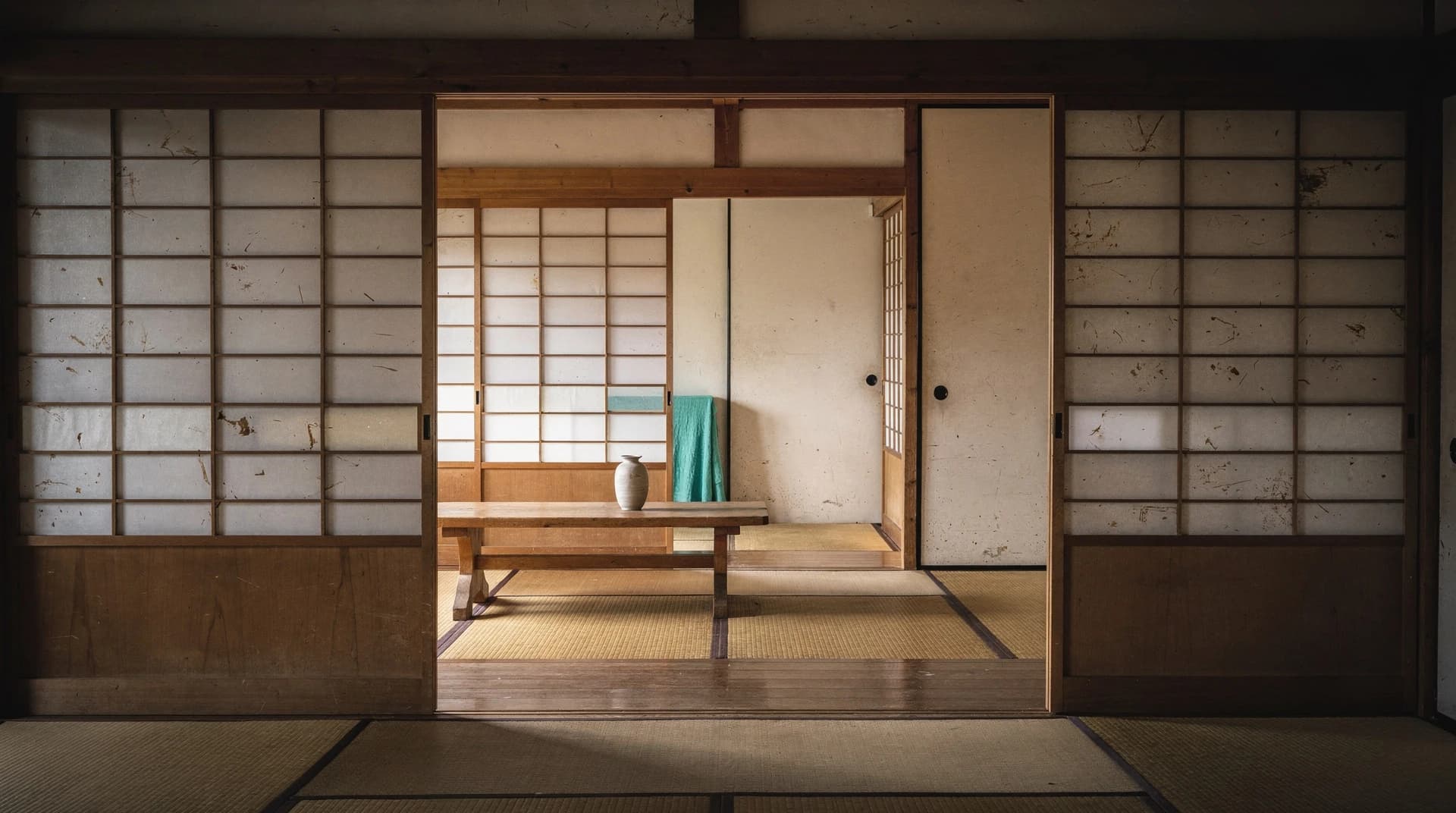
The entrance opens into a bright living room. The walls do not press in — they envelop. The wooden threshold responds softly underfoot, gentle light from the inner courtyard touches the bamboo screens, and minimalist shelves with ceramics create the feeling of time that is never interrupted here.
This is a space where room interior design stops being a set of decisions and becomes a state — quiet, composed, focused.
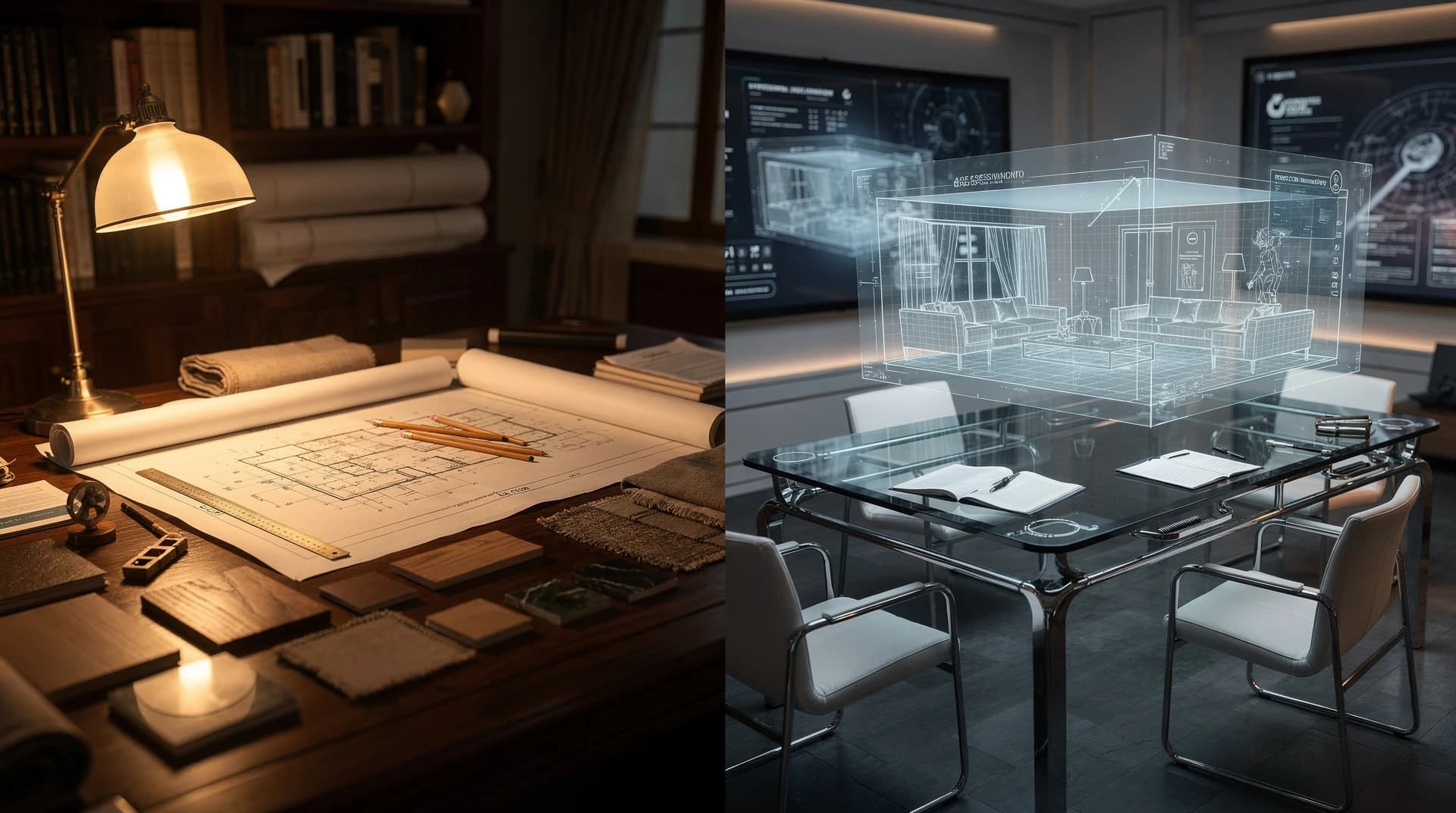
In such scenarios, interior design with AI works with particular precision: through AI for home design, it becomes possible not so much to reproduce a form as to assemble an atmosphere — through light, colour, and rhythm.
Unobtrusive Vintage.
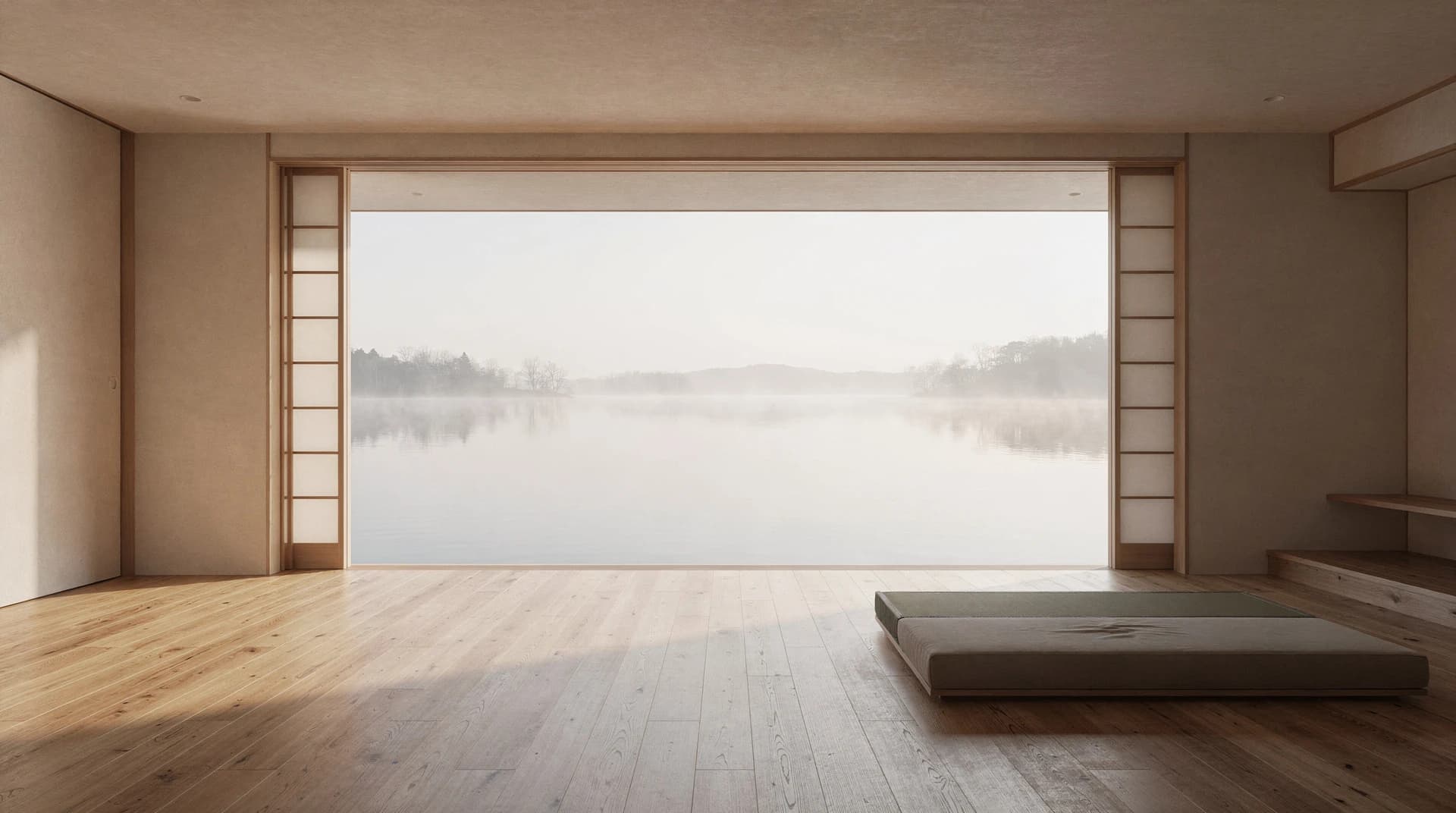
Next comes the bedroom — a space where the patina of time is not stylised, but lived. A low futon bed, textiles with a soft turquoise accent, old wood that still holds warmth. Paper lanterns diffuse the light without creating boundaries.
Here, the interior designer works almost invisibly — through balance, pauses, and emptiness. And it is precisely such systems that algorithms read with particular accuracy when a room needs to be designed not as a composition, but as a state.
Poetry Instead of Decoration.
There is no decoration in this interior in the conventional sense. There is rhythm, breath, pause.
A generative approach makes it possible to translate this into the language of systems: where every line is not a form, but the trace of a process.
For us, as creators of a generative design platform working with interiors, such spaces are not merely a visual reference. They confirm that architecture and interiors are increasingly moving into the realm of sensation, where technology becomes a tool not of reproduction, but of interpretation.
This is not so much about the East as a style, but about the East as a way of seeing space. About how an interior can sound quieter — and, precisely because of that, become deeper.
We breathed in Eastern silence, heard the autumn whisper — and wanted to live this poetry of space through AI.
Source of inspiration:
Ekaterina Goncharenko, photo: Mikhail Loskutov
https://wolmagazine.com/journal/interior/pavlovskaya-studio
Text and visual imagery: TimeAI.